
a blog, revisiting past award winners
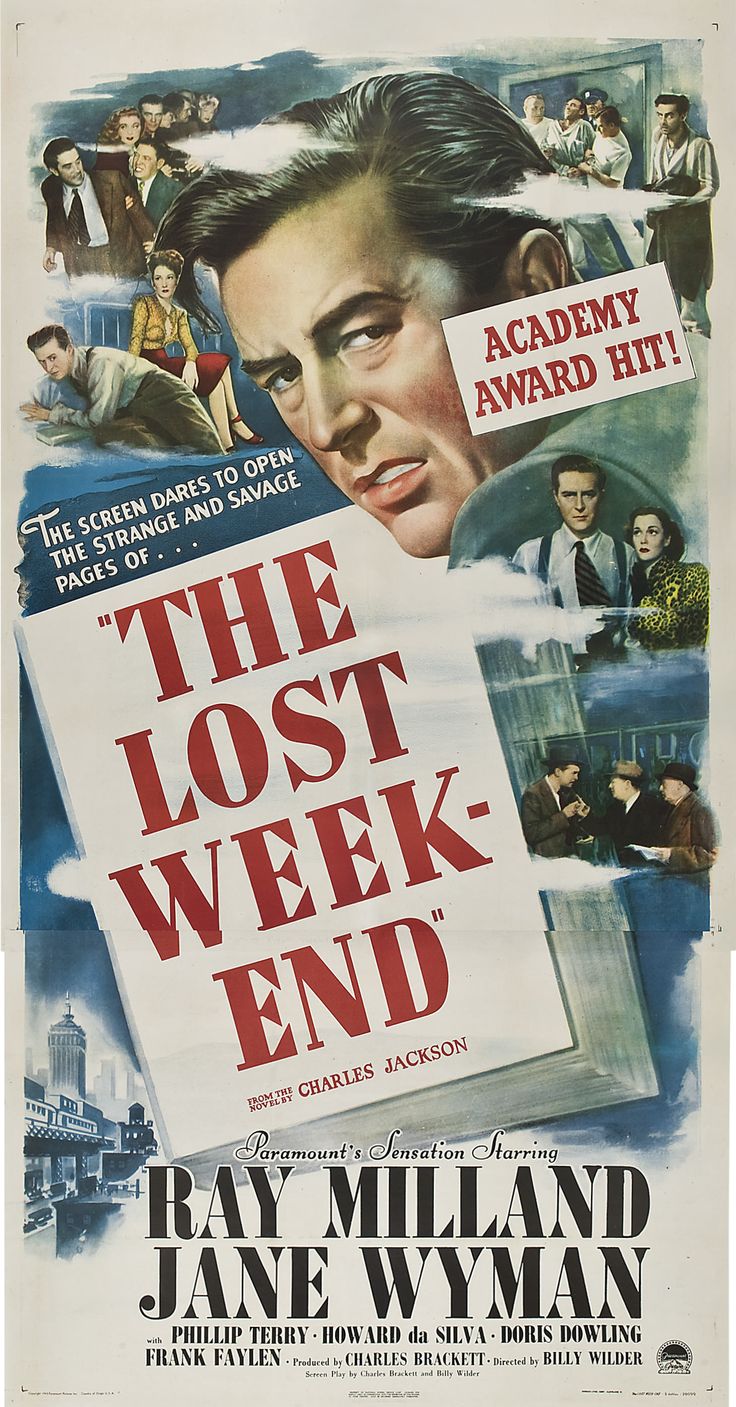
EveryBestPicture.com revisits this Oscar Best Picture winner
Content advice: Alcohol abuse
This picture doesn’t hold back. From the opening shot of anguished glances out of a bedroom window and music designed to make you feel deeply uneasy you know that this is no run of the mill drama. This is noir. Billy Wilder wrote and directed this, and you can see the hand of a master at work on a passion project. He wrote this with a writer friend and colleague in mind (a certain Raymond Chandler), someone he felt could do with seeing himself and his alcoholism as others did. Don Birnam (Ray Milland) is a man whose master is drink, is only happy when taking orders from the bottle and people just seem to get in his way. 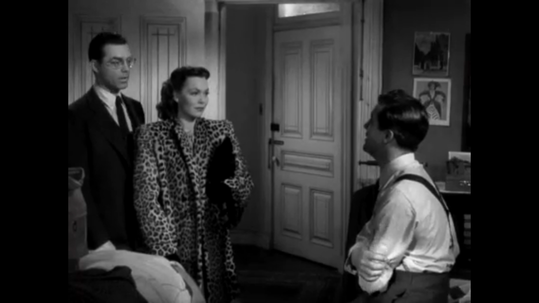
They just can't leave him alone...
The detail in each shot, street scenes shot with hidden cameras to ensure that they could have real life passing by, no extras, no stiffness. Wilder sought naturalism, a flow, which although he perfected later in films such as ‘Some Like it Hot’ he was already well on the way. He was an innovator, too- taking a risk in allowing a new electronic instrument which would haunt many a film after this, the theremin. It dominates the score with a suffocating sense of foreboding and tied in the magical dark influence of alcohol on Don. The director also introduced what appeared to be an early version of a new shot: as Don walks down the road you see superimposed behind and around him the places he drunkenly stumbles past, copied countless times in cinema and TV since. Ray Milland’s performance is tense and tight when sober, perhaps overly so, but entirely successful in portraying the constant battle against the urge to drink or for his next drink, depending on which way he sways. When drunk he eases into a smoother, lilting performance with a touch of melancholy, aptly reflecting his resignation to yet another defeat, yet another time where he felt he simply wasn’t strong enough. 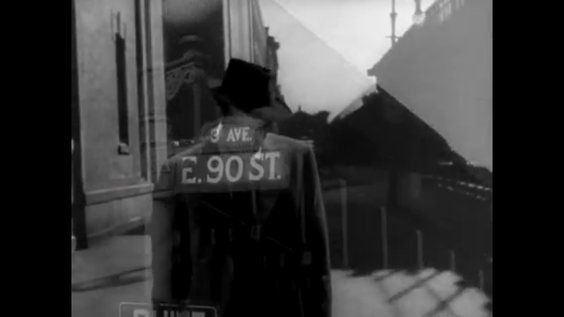
A cinematic trope began here- walking down street superimpositions showing a long journey.
Much like alcoholism, the film ebbs and flows. This film has a feel of the sea, the rocking, the relentless power of the disease, unstoppable even when the three principles are on rare occasions united against it. This is undoubtedly a compassionate film which can be commended for showing the alcoholic as a victim of a disease: simultaneously being the only one with the power to free themselves while also being the last person they themselves would want to give that power to. The attitudes depicted in the film are shockingly modern- I say shocking because this film, made nearly 80(!) years ago shows how despite all our advances in therapy, technology and medicine people suffer in much the same way from the sickness and the attitudes towards it. They are also still surrounded by loved ones who also suffer, willing but helpless, sometimes depicted unwittingly, haplessly enabling the addiction. I have found a few films from early cinema where the melodrama distracts from the story, that the storytelling might have been aided for a modern audience with a little more naturalism (All Quiet on the Western Front is one). Here the story’s effect is heightened by the melodramatic acting style- film noir is often built on it, and it is so woven into the fabric of this picture that it only adds to the power it still holds over its audience. 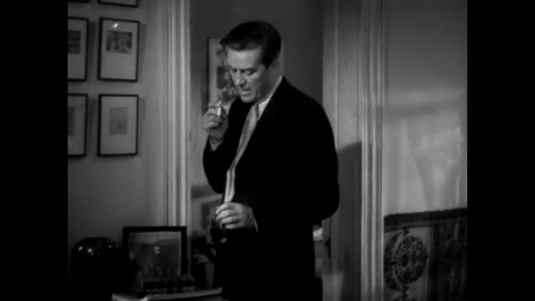
That first sip is the only one you need refuse
Although the credits roll, we are left in no doubt that the tale doesn’t end there. This is one of 52 weekends that year and Don will have to fight for every last one of them. The message sent is one of hope, but doesn’t leave reality behind. It may be that if we keep up the fight, side by side, there are more victories than defeats. But no guarantees, and this is a battle for life. We’re with you Don, it was Wilder who put us there, and I am grateful he did.
With thanks to Tom Gore who requested this review
|
Previous ReviewsComing soon:Archives
February 2019
Categories
All
AuthorPablo Griffiths is a man with a passion for many things. He has recently taken an interest in writing about film, and himself in the third person. |
 RSS Feed
