
a blog, revisiting past award winners
EveryBestPicture.com revisits this Oscar Best Picture winner
Oh dear. I am open to accusations of having a deaf ear to musicals, counting but a few in a very long list of beloved films. However, this classic, a jaunty tale of an entitled middle-aged American ex-G.I. (Gene Kelly as Jerry Mulligan) struggling as an artist in a painted set Paris really did exemplify why the genre is so maligned by many. The inevitable love affair begins when he daintily harasses a very reluctant 19 year-old (Lise Bouvier, played by Leslie Caron) into a date while taking advantage of the vulnerabilities (and means) of a divorcee closer to his age (Milo Roberts, played by Nina Foch). We are supposed to love this. Gene Kelly's charms are undeniable- the smile, his grace, his looks and voice would each be enough to launch a star and in combination he lights up the screen. But when forcing himself on young women, the charms flake away revealing a forty-something guy who dyes his hair and won't take no for an answer. Eugh. 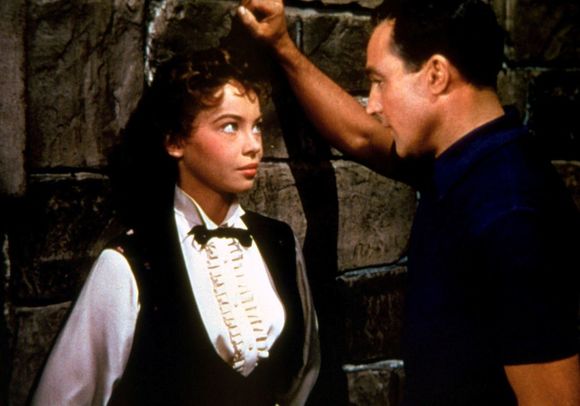 I'll bet no one has ever sexually harassed you by a river in the dark with THIS much charm. At least, I HOPE not... Apparently, borderline creepy not taking no for an answer works. Tip: stare at a girl you don't know when in a cafe long enough to make her visibly uneasy, then interrupt her conversation pretending to know her (so that her companions don't intercede and even give you her phone number "I lost it!") and drag her to the dance floor, even if she is telling you 'no'. It obviously results in Lise being unable to resist Jerry and they go on a few dates. He sings, he dances, she falls for him. Only....... she is already 'with' Henri Baurel (played by equally entitled, old and talented singer/dancer Georges Guétary) and upon meeting Jerry decides that the next correct course of action is to....... accept an offer of marriage from Henri (Eh?!). And continue to meet with Jerry behind Henri's back, without telling either that she is committed to both relationships. Fully. OK. The dance numbers that are randomly interspersed, often without warning, seem to me to be very much by the numbers. I am no expert, and am probably revealing this in saying that to a lay viewer the value appeared to be in the set design and costumes. They stood out in their quality- sure, everyone danced well, but these interjections bore almost no relation to the plot and some seemed to last interminably. The opening scenes featured a number in which Henri boasted about his girlfriends many charms, each charm ("she reads books") was followed by a 1 minute dance solo on a striking colour-themed set from Lise (reading books while dancing in a yellow set, for instance). By the 3rd 'charm' I was wondering how many there were going to be, by the 6th I was hoping it was the last, by the last I had literally fallen asleep. Admittedly, as a teacher, Friday night is not the best time to watch an unknown entity. So I paused, and came back to it the next day. 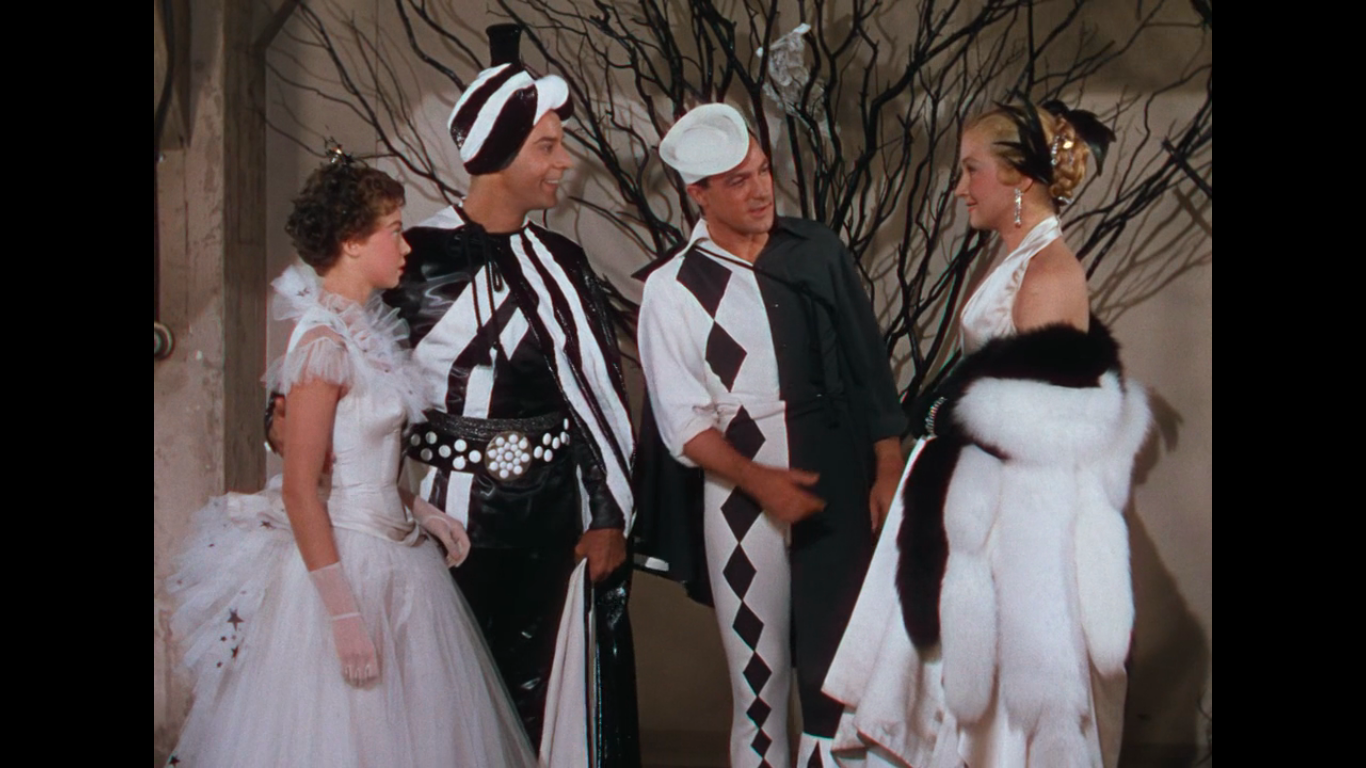 "Henri, let me introduce you to the lady who is bankrolling my seduction of your fiancee..." Lise soon reveals that she only feels compelled to marry Henri because he looked after her when she was a child, while her parents were fighting for the French Resistance. There's something more than just a little uncomfortable about this Woody Allenesque arrangement. But never mind. LOOK! Dancing! The movie is also distractingly disjointed. Not just because I watched it over two viewings. The story leaves holes big enough to build several Eiffel towers: what happened to Milo, Jerry's cash cow divorcee? Last seen exiting stage left for a glass of champagne, unbeknownst to her Jerry then left the room without saying goodbye to bid his other love farewell. Milo would have returned with two glasses wondering where her date went. But don't think about that. LOOK! A dance number! After a brief exchange with Jerry we see Lise drive off with tears in her eyes. After a 17 minute song and dance number that happens in Jerry's head Henri drives Lise back into the arms of Jerry (-literally, he takes her there in a powder blue Citroen). Why was Henri, the man previously so pleased with his 10 year grooming project coming to fruition so glad to see Lise disappear into the arms of Jerry? Did a gendarme see this scene of mid-life crisis (19 year old woman crying out of the window being driven away by a middle aged menace to innocence) question both parties and promptly turn the car around? Was it a noble act, without a hint of reluctance? Did he have another friend queueing up to hand over their daughter? Take your pick of the explanations, because it is far from clear. 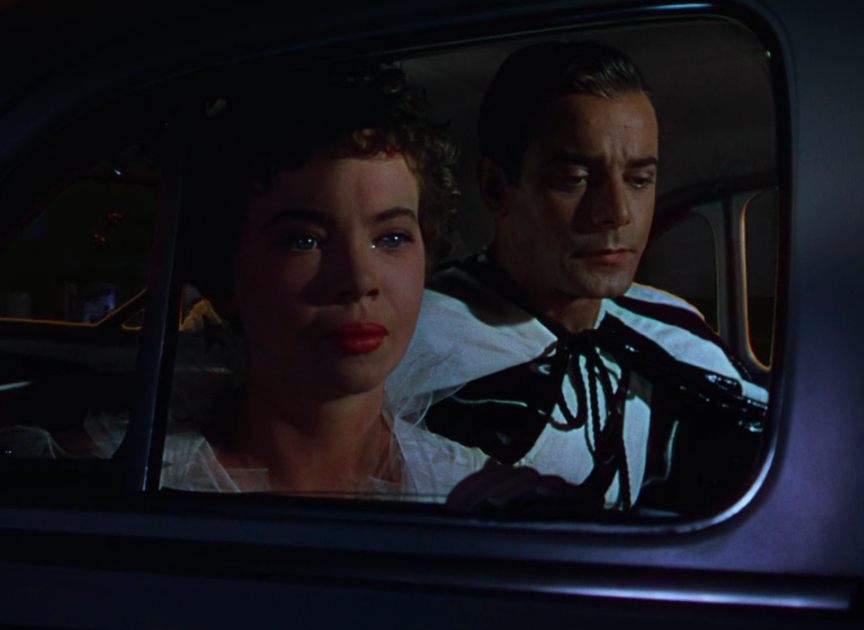 The happy couple (childcatcher and victim) drive off into the dusk. With a look on his face like he just found a golden croissant Henri bids her farewell and skips into the ether. Jerry and Lise bound towards each other delighted and wordlessly walk away from the camera into their future as Gershwin's score swells. This film managed to make so much hard work (the choreography, the set, the dancing, the costumes, the extras, the orchestra, the score) come across as half hearted. This is quite an achievement. The script was the last on their list of 'things to consider'- everything else came first, and so the film flops around like sardines on the deck of a trawler: all energy, no plan. A huge disappointment given the quality of grace onscreen. The sexual politics were just as distracting as was the lack of cohesion between scenes (or even acts). There were enough loose threads to repair an ageing sofa. Lise was left looking like a rag doll, as she was passed between her two male lovers and eventually had her mind made up for her when Henri gleefully handed her back to Jerry. I didn't get the impression that their renewed love affair would last. Much like the 'magic' of this film, their affair will also have faded and been forgotten by Autumn 1951. |
Previous ReviewsComing soon:Archives
February 2019
Categories
All
AuthorPablo Griffiths is a man with a passion for many things. He has recently taken an interest in writing about film, and himself in the third person. |
 RSS Feed
